The Hot Box Sauna needed a booking experience that could move beyond a traditional e-commerce journey. Lemon Hive designed and built a bespoke platform around sessions, locations and customers, combining Next.js, Payload CMS and Mariana Tek to deliver flexible booking journeys, streamlined content management and a scalable foundation for future growth.


Table of Contents
The project at a glance
# The project at a glance# The challenge: Outgrowing a product-based booking journey# The client perspective: Building for the next stage of growth# The approach: Designing around how the business really works# The platform: Separating experience, content and operations# Custom booking journeys: Supporting guest, group and private reservations# The outcome: A platform shaped around The Hot Box Sauna# What comes next: Supporting new channels and markets
The project at a glance
The challenge
The Hot Box Sauna had outgrown a booking journey structured around e-commerce products rather than time-based wellness experiences.
The approach
The project began with the operational reality behind each booking, translating complex rules into journeys that reflect how customers make decisions.
The solution
A bespoke Next.js-based front-end brings together Payload CMS, purpose-built reservation journeys, and Mariana Tek’s operational capabilities into one flexible booking experience.
The outcome
The Hot Box Sauna now has a cohesive platform that offers customers more appropriate ways to book while separating content, customer experience, and booking operations.
The challenge: Outgrowing a product-based booking journey
As The Hot Box Sauna expanded across Ireland, its website needed to do more than communicate the brand. It had to help customers understand its locations and session types, check availability, make the right reservation and manage an existing booking.
Its existing product-based ecommerce flow was no longer suited to that journey. Sauna sessions are time-based experiences governed by availability, capacity and location-specific rules, not products taken from a shelf.
Customers also needed different ways to book. Someone might be making their first reservation as a guest, organising a session for a group, hiring an entire sauna privately or moving an existing booking to another time.
Memberships, credits, vouchers and add-ons introduced further considerations. Each needed to be presented simply to the customer while being processed correctly behind the scenes.
For an in-person experience intended to feel calm and considered, the digital entry point needed to feel just as clear.
The client perspective: Building for the next stage of growth
The approach: Designing around how the business really works
The engagement began with an understanding of the business behind the interface.
Workshops explored session structures, locations, private and social experiences, customer account states, memberships, credits, vouchers and the administrative pressure created by existing workflows.
The team then mapped the journey from discovering a location to comparing sessions, completing payment and managing a reservation.
One principle guided the work: the platform should begin with what the customer wants to do, rather than how the underlying systems organise their data.
The project followed a practical Double Diamond process, opening up the problem through discovery, defining the journeys that mattered most and repeatedly testing and refining the proposed solution.
Figma supported that process from early exploration through to delivery. It was used to map journeys, compare approaches, prototype booking states and create a shared design system before those decisions moved into development.
This was an evolution of The Hot Box Sauna’s digital experience, not a rebrand. Its existing identity was translated into a coherent interface spanning editorial content, session discovery, booking and account management.
The platform: Separating experience, content and operations
The architecture gives each part of the platform a distinct role.
Next.js powers the customer-facing experience. It provides the flexibility required to create tailored journeys across editorial content, session discovery, booking and account management.
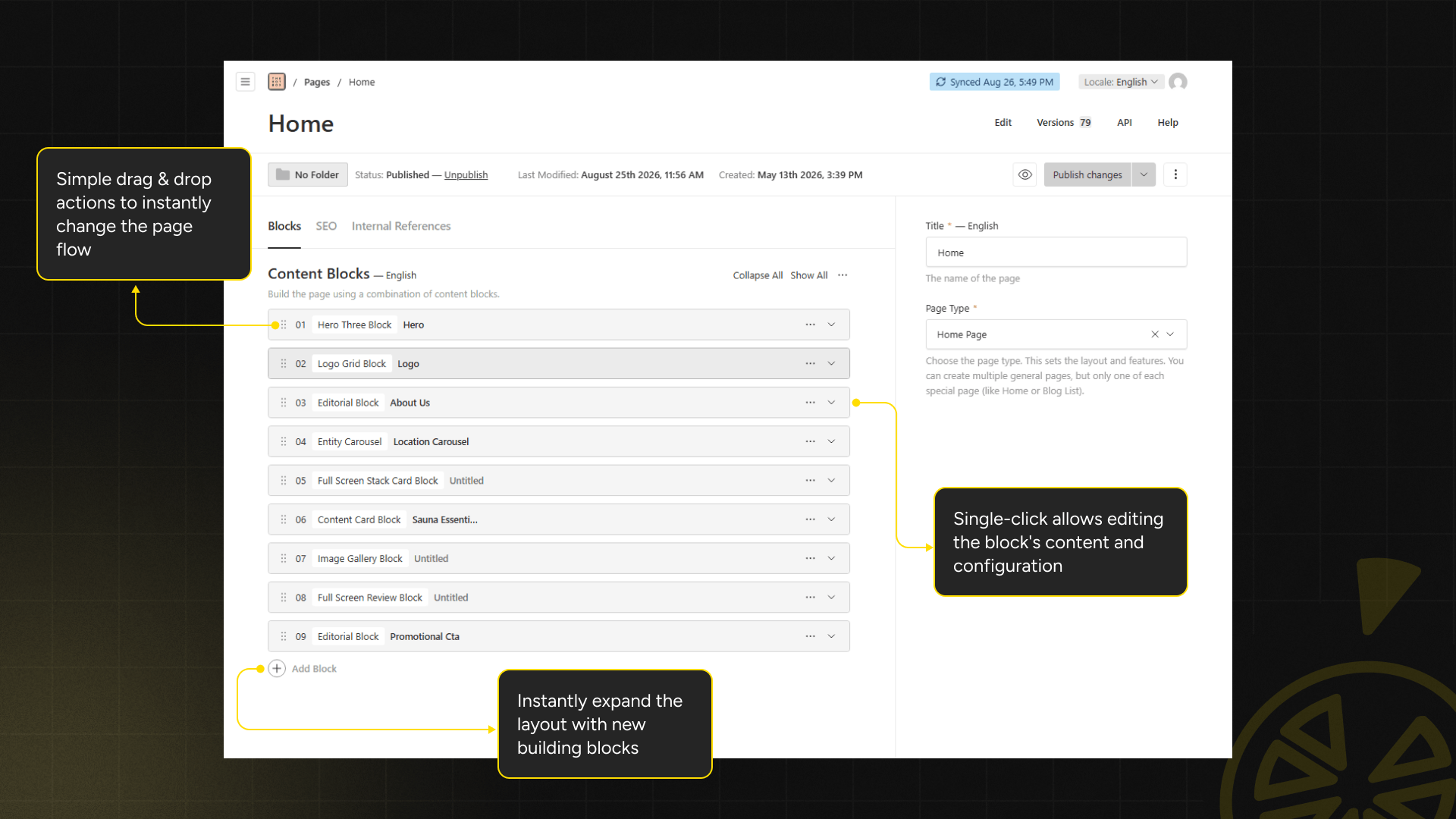
Payload CMS manages content and marketing. The Hot Box Sauna adopted Lemon Hive’s Payload foundation, giving its team access to composable page-building, SEO controls, and editable content for locations, sessions, and campaigns.
Mariana Tek remains the operational engine. Its booking and reporting capabilities support schedules, availability, reservations, memberships and credits.
A custom integration gateway connects these layers. It translates customer actions into the data structures and operational rules Mariana Tek expects, coordinating availability, inventory, booking holds and payments.
This separation allows the customer experience, marketing content and booking operations to evolve without requiring the entire platform to be rebuilt around every change.
Session discovery: Helping customers find the right experience
The journey begins with the customer’s decision, not with the structure of the booking system.
Location pages bring together practical information, distinguishing features and live session availability. Customers can understand what makes each location different and compare relevant experiences without repeatedly changing filters or moving between pages.
This makes session discovery part of the customer journey rather than an administrative step before checkout.
It also gives each location space to communicate its individual offering while maintaining a consistent booking experience across the platform.
Custom booking journeys: Supporting guest, group and private reservations
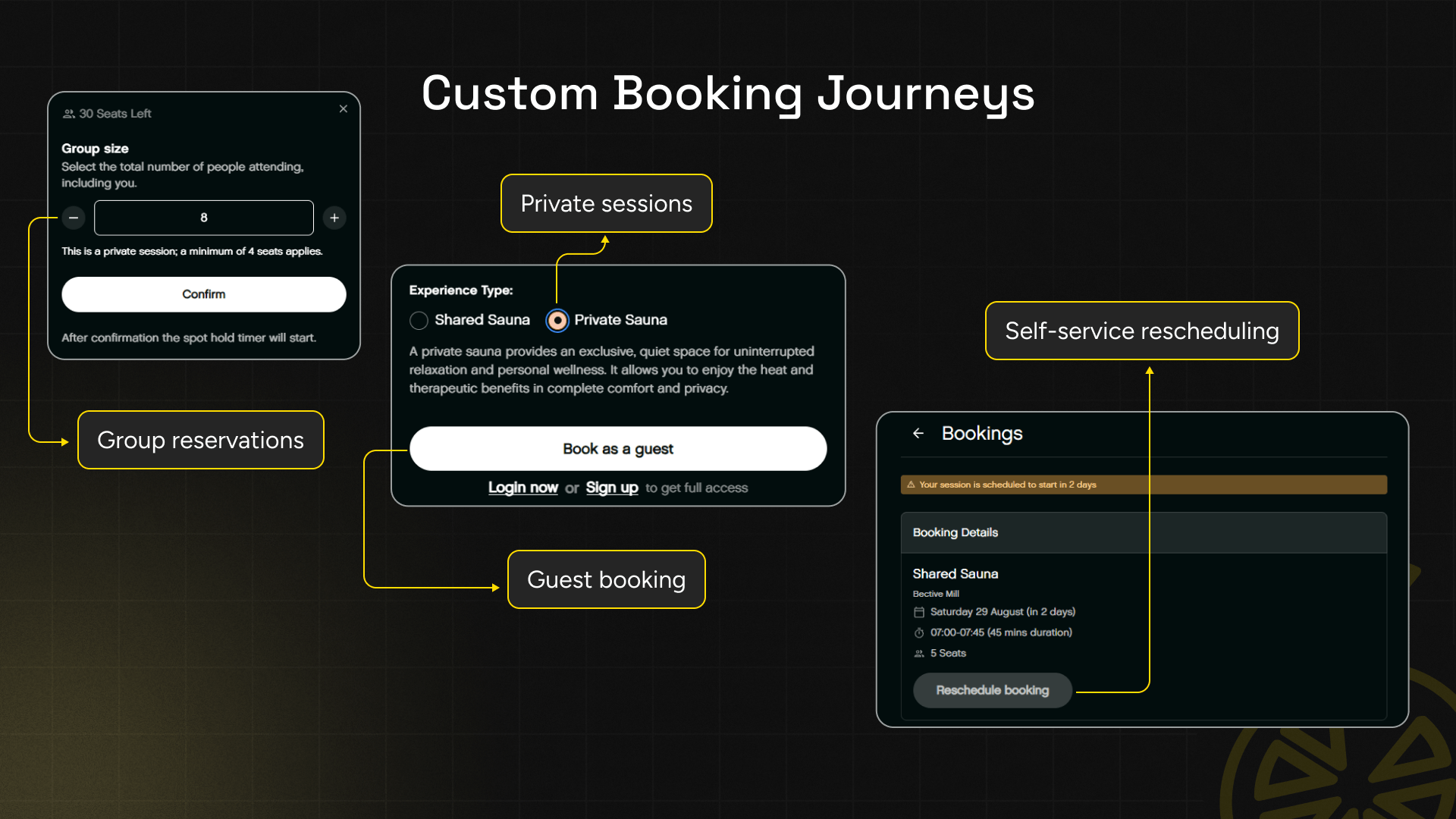
The core booking journeys were designed around situations The Hot Box Sauna encounters in practice.
Guest booking
First-time and occasional customers can reserve a session without creating an account. Returning customers can still sign in to use relevant memberships, credits and vouchers.
This removes account creation as a barrier to someone’s first booking.
Group reservations
One customer can organise a reservation for several people. The platform manages the capacity, reservation and payment states involved while keeping the customer journey understandable.
Private sessions
Customers can reserve an entire sauna rather than selecting individual places within a public session. The interface adapts to the type of experience being booked while the integration maintains the correct underlying inventory.
Self-service rescheduling
Eligible customers can move an existing reservation themselves. The journey reuses familiar session-selection patterns, helping customers make a change without creating a separate administrative process for the team.
These are not simply visual alternatives to a standard checkout. Each journey reflects different customer needs and operational rules, making them a substantial part of the bespoke engineering work.
Checkout: Protecting availability and simplifying payment
Availability can change while a customer is completing a reservation.
A booking hold timer temporarily protects the selected inventory during checkout. The platform continues to validate availability as the customer moves through the journey and can provide clear feedback if circumstances change before payment is completed.
Customers can also purchase a reservation and any relevant add-ons through a single unified checkout rather than completing separate transactions.
Behind the interface, memberships, credits, vouchers, and payments are processed and validated in the correct order. This complexity remains largely out of sight, so the customer experiences a single straightforward transaction.
Reservation layouts can also be configured through the CMS. This gives The Hot Box Sauna greater control over how different booking experiences are presented without requiring a code release for every adjustment.
Content management: Giving the team greater autonomy
The content platform and bespoke reservation functionality serve different purposes.
Payload provides reusable modules for creating pages, updating location and session information, supporting campaigns and managing on-page SEO.
This gives The Hot Box Sauna’s team greater control over routine publishing and campaign updates without relying on routine developer support.
It also prevents marketing content from becoming unnecessarily coupled to either the booking system or the development roadmap.
Quality assurance: Testing the journeys customers depend on
Quality assurance was integrated throughout delivery rather than left until the end of the project.
Testing covered guest and signed-in customers, memberships, credits, vouchers, group reservations, rescheduling, timer expiry, changing availability and mixed payment scenarios. Regression testing helped ensure that new changes did not disrupt established journeys.
The experience was also tested across browsers and device types.
Accessibility was part of the design and delivery process from the outset, with the interface designed in line with WCAG 2.2 AA.
The outcome: A platform shaped around The Hot Box Sauna
The new platform replaces a product-led ecommerce journey with an experience designed around locations, sessions and customers.
Customers can discover relevant experiences more clearly, choose an appropriate way to book and exercise greater control over eligible existing reservations.
The Hot Box Sauna team can manage content and booking presentation with greater autonomy, while Mariana Tek continues to provide the operational depth for schedules, reservations, memberships, credits, and reporting.
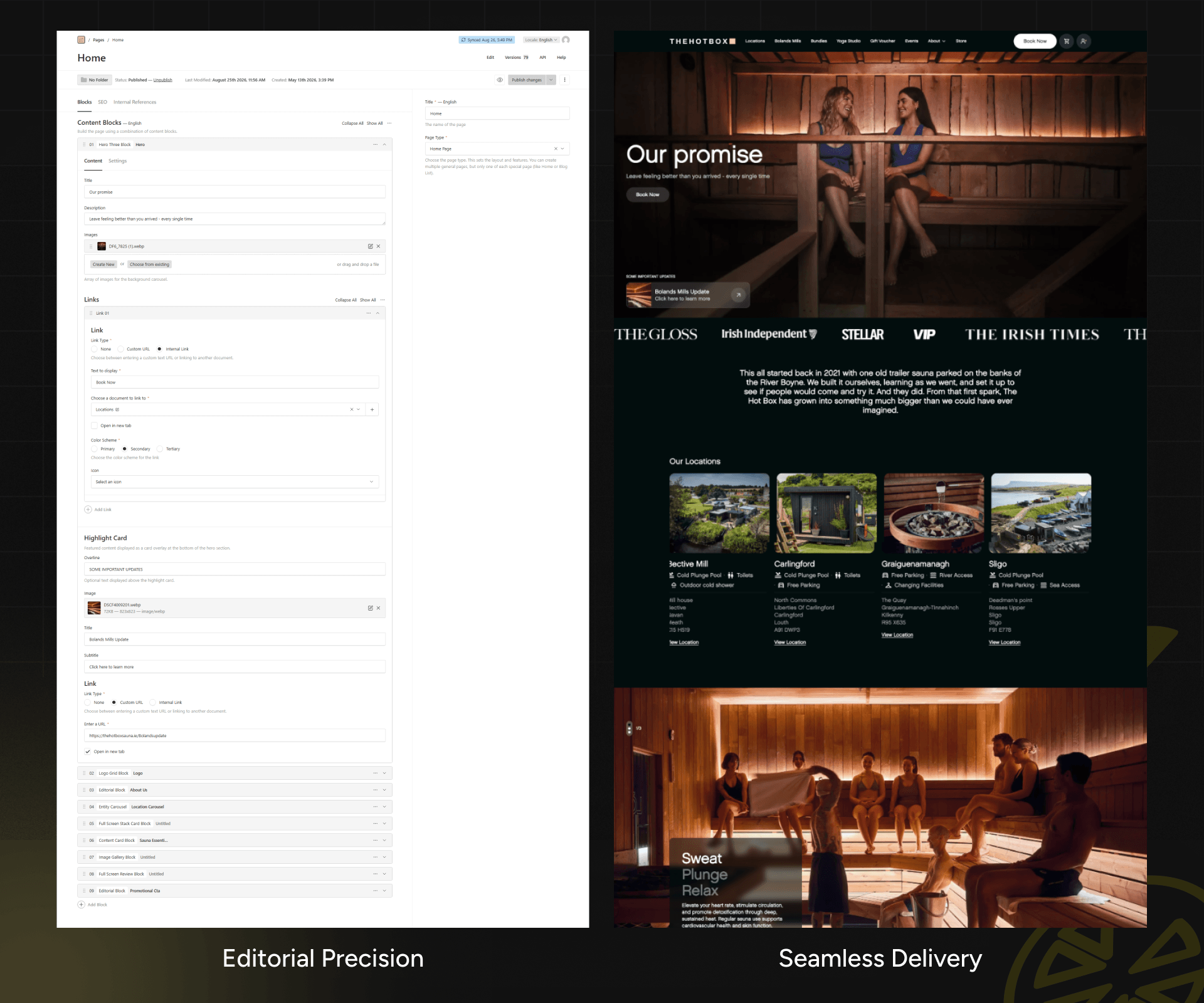
The separation between customer experience, content and booking operations gives each area room to evolve without compromising the others.
What comes next: Supporting new channels and markets
A React Native application for iOS and Android is launching in Q4 2026, extending the booking experience into another customer channel. We also built custom loyalty functionality because no off-the-shelf system had the required features.
The Hot Box Sauna is also preparing to expand into the United States under the KOTA Sauna brand.
The platform’s separated architecture and custom integration gateway provide a foundation that could support these additional channels and markets while keeping Mariana Tek at the operational core.
Table of Contents
# The project at a glance# The challenge: Outgrowing a product-based booking journey# The client perspective: Building for the next stage of growth# The approach: Designing around how the business really works# The platform: Separating experience, content and operations# Custom booking journeys: Supporting guest, group and private reservations# The outcome: A platform shaped around The Hot Box Sauna# What comes next: Supporting new channels and markets